Quick Facts
| Listed Calories | 550 |
| Real Range (with granola, almonds, dressing) | 705 – 990 |
| Protein | 28g |
| Price | ~$10.19 |
Why “550 Calories” Is the Wrong Number to Plan Around
Chick-fil-A lists the Market Salad at 550 calories. That number is accurate for the salad itself — but it doesn’t include two things that come standard with the order: Harvest Nut Granola (70 calories) and Roasted Almonds (60 calories), both served “on the side” rather than mixed in, plus whichever dressing you choose, which ranges from 25 to 310 calories depending on the option.
Add it up and the realistic total for this salad, eaten as most people actually eat it, runs from 705 calories (lightest dressing) to 990 calories (heaviest dressing) — not the 550 printed on the menu board. This isn’t unique to Chick-fil-A’s marketing; “on the side” items are excluded from headline calorie counts across most chains. It’s just worth knowing before you assume this salad is automatically a 550-calorie meal.
The Full Dressing Range (All 7 Options)
This is worth laying out in full, since the swing between options is larger here than on most menu items:
| Dressing | Calories |
|---|---|
| Light Italian | 25 |
| Light Balsamic Vinaigrette | 80 |
| Fat-Free Honey Mustard | 90 |
| Zesty Apple Cider Vinaigrette | 230 |
| Garden Herb Ranch | 280 |
| Creamy Salsa | 290 |
| Avocado Lime Ranch | 310 |
The dressing alone can account for a 285-calorie swing — roughly half the salad’s own base calorie count. The vinaigrette is the dressing Chick-fil-A pairs with this salad by default, which puts most orders closer to the 850-calorie mark once granola and almonds are factored in, rather than the advertised 550.
What’s Actually In the Bowl
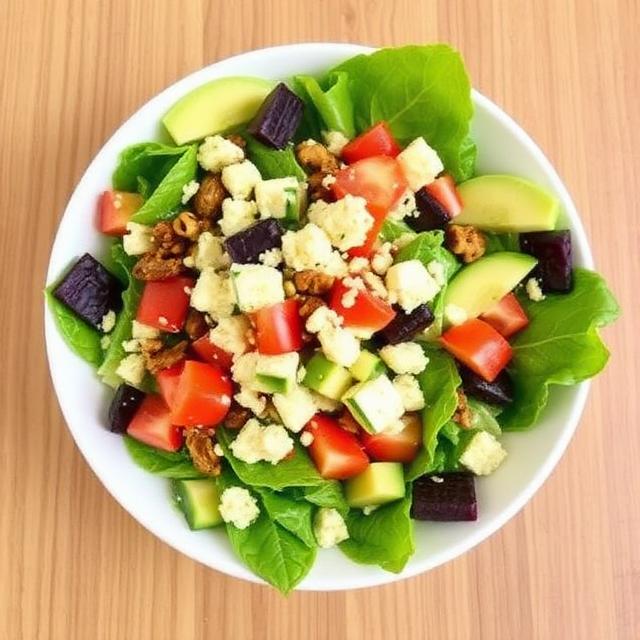
The base is a mix of romaine, green cabbage, and red and green leaf lettuce, topped with sliced grilled chicken breast, crumbled blue cheese, red and green apple slices, strawberries, and blueberries.
The blue cheese is worth calling out specifically — it’s a less common choice for fast food, and it’s a much sharper, more pungent flavor than the mild cheddar or Monterey Jack blends used on Chick-fil-A’s other salads. If you’ve had other Chick-fil-A salads and assume the cheese will taste similar, this one is a different experience entirely.
Allergens to know: Milk, Egg, Wheat, Soy, and Tree Nuts (from the almonds and granola) — this is one of the more allergen-dense salads on the menu specifically because of the granola and almond components.
How It Compares to Other Chick-fil-A Salads
| Salad | Listed Calories | Protein | Fat | Price |
|---|---|---|---|---|
| Market Salad | 550 | 28g | 31g | $10.19 |
| Spicy Southwest Salad | 680 | 33g | 49g | $8.19–$10.19 |
| Cobb Salad (Grilled Filet) | 520 | 41g | 28g | $9.99–$10.99 |
| Cobb Salad (Nuggets) | 830 | 42g | 60g | $9.99–$10.99 |
On paper, the Market Salad looks like the lightest option here. Once you factor in granola, almonds, and a typical dressing choice, it’s frequently the most calorie-dense of the four — simply because so much of its calorie count sits in components that aren’t included in the headline number, the same dynamic we found with the Spicy Southwest Salad’s add-ons.
If protein-per-calorie is your priority, the Grilled Filet Cobb still wins clearly — 41g protein at 520 listed calories, with no major “on the side” additions hiding extra calories the way this salad does.
The Side Item Worth Knowing About: Kale Crunch
Technically a side rather than a full salad, Kale Crunch has built its own following. It’s chopped kale and shredded cabbage tossed in a maple-Dijon vinaigrette, topped with roasted almonds.
| Nutrient | Amount |
|---|---|
| Calories | ~187 |
| Protein | 4g |
| Fat | 16g |
| Fiber | 4g |
| Sugar | 6g |
Worth noting: at 16g of fat for only 4g of protein, this side leans more toward “flavorful vegetable side” than “nutritionally dense salad” — it’s a good pairing if you want greens alongside a protein-heavy main, not a standalone meal replacement.
Building a Smarter Version
If you want the Market Salad without the calorie creep from the side items:
- Skip or share the granola and almonds — together they’re 130 calories that aren’t part of the advertised total
- Choose Light Italian or Light Balsamic instead of the default vinaigrette — saves up to 205 calories versus the standard pairing
- Ask for dressing on the side and use half — this works for any of the seven options and roughly halves whatever calorie cost you’d otherwise take on
Stack all three and you can land close to the advertised 550-600 calorie range that the menu board implies — but only with deliberate choices, not by default.
Homemade Kale Crunch (Copycat Version)
If you want to recreate the side dish at home, this serves about 6:
Dressing: Whisk together ¼ cup extra-virgin olive oil, 2 tbsp apple cider vinegar, 2 tbsp maple syrup, 1½ tsp Dijon mustard, ¼ tsp salt, a pinch of black pepper, and ½ tsp white wine vinegar until emulsified.
Salad: Massage 10 cups of chopped curly kale (stems removed) with about a tablespoon of the dressing using your hands until the leaves brighten slightly — this step softens the kale’s natural toughness. Add 2 cups of thinly sliced green cabbage, toss with the remaining dressing, and top with ½ cup chopped roasted almonds just before serving.
Per serving: roughly 187 calories, 4g protein, 16g fat — closely matching the restaurant version.
A Note on the Fruit Component
Fresh apples, strawberries, and blueberries are a genuine point of difference here — most fast-food salads rely on dried fruit (raisins, cranberries) rather than fresh produce, since fresh fruit has a shorter shelf life and adds preparation complexity. Chick-fil-A using fresh fruit slices on a salad that’s assembled to order is a meaningful quality signal, even though it doesn’t show up as a distinct line item in most nutrition comparisons.
The trade-off is consistency — fresh fruit ripeness varies by location and season in a way that processed toppings don’t, so the exact sweetness or texture of the apples and berries can shift slightly between visits in a way it wouldn’t with, say, the tortilla strips on the Spicy Southwest Salad.
Which Dressing Actually Fits This Salad Best?
With seven dressing options available, it’s worth narrowing down which ones actually complement the Market Salad’s specific flavor profile rather than just picking by calorie count alone. Since this salad already carries sweetness from the fresh fruit, a creamy or tangy dressing tends to balance it better than another sweet option would.
Zesty Apple Cider Vinaigrette (230 calories) is Chick-fil-A’s own pairing recommendation, and it makes sense flavor-wise — its acidity cuts through the sweetness of the berries and apples rather than compounding it. Light Balsamic (80 calories) offers a similar tangy contrast for a fraction of the calories, making it the better pick if you want that same balancing effect without the calorie cost. The creamier options — Garden Herb Ranch and Avocado Lime Ranch — work better on the Cobb or Southwest salads, where the base flavors are savory rather than fruit-forward; on the Market Salad, they tend to mute the fruit rather than complement it.
Is the Market Salad Worth the Price?
At roughly $10.19, this is one of the pricier items on Chick-fil-A’s menu. What you’re paying for is genuinely distinct from the rest of the lineup — fresh fruit and blue cheese aren’t ingredients used anywhere else on the menu, which makes this the one salad built around a sweet-savory profile rather than the smoky or spicy direction of the Cobb and Southwest options.
If you’re choosing based on flavor variety rather than pure nutrition efficiency, this is the salad that offers something the others genuinely don’t replicate.
My verdict: I tried the Chick-fil-A Market Salad — the fruit and greens were fresh and the chicken was tender, giving a nice sweet-savory balance. I wasn’t a big fan of the blue cheese; its sharpness overpowered some of the other flavors. Portion felt generous and satisfying for a meal.
FAQ
Are the granola and almonds included in the 550-calorie count? No — they’re served on the side and add roughly 130 calories combined when eaten, which most calorie counts for this salad don’t account for.
What cheese does the Market Salad use? Crumbled blue cheese — a sharper, more distinct flavor than the Monterey Jack/Cheddar blend used on Chick-fil-A’s other salads.
What’s the lowest-calorie way to order it? Skip the granola and almonds, and choose Light Italian dressing — this keeps the total close to the advertised 550-calorie mark.
Is Kale Crunch the same as the Market Salad? No — it’s a separate side item with kale and cabbage rather than lettuce, fruit, or chicken, and it’s not meant as a standalone meal.
How does this compare to the Spicy Southwest Salad on calories? The Market Salad is listed lower (550 vs 680), but once granola, almonds, and a standard dressing are added, the real-world totals end up much closer than the menu board suggests.
This is an independent guide and is not affiliated with Chick-fil-A, Inc. Prices and availability may vary by location.

- Chick-fil-A Grilled Chicken Cool Wrap: Why “Fresh and Light” Doesn’t Mean Low Calorie - June 4, 2026
- Chick-fil-A Cobb Salad: The “Healthy” Option That’s Actually the Highest-Calorie Item on the Menu - June 3, 2026
- Chick-fil-A Market Salad: The “550 Calories” Number Doesn’t Tell the Whole Story - June 2, 2026